
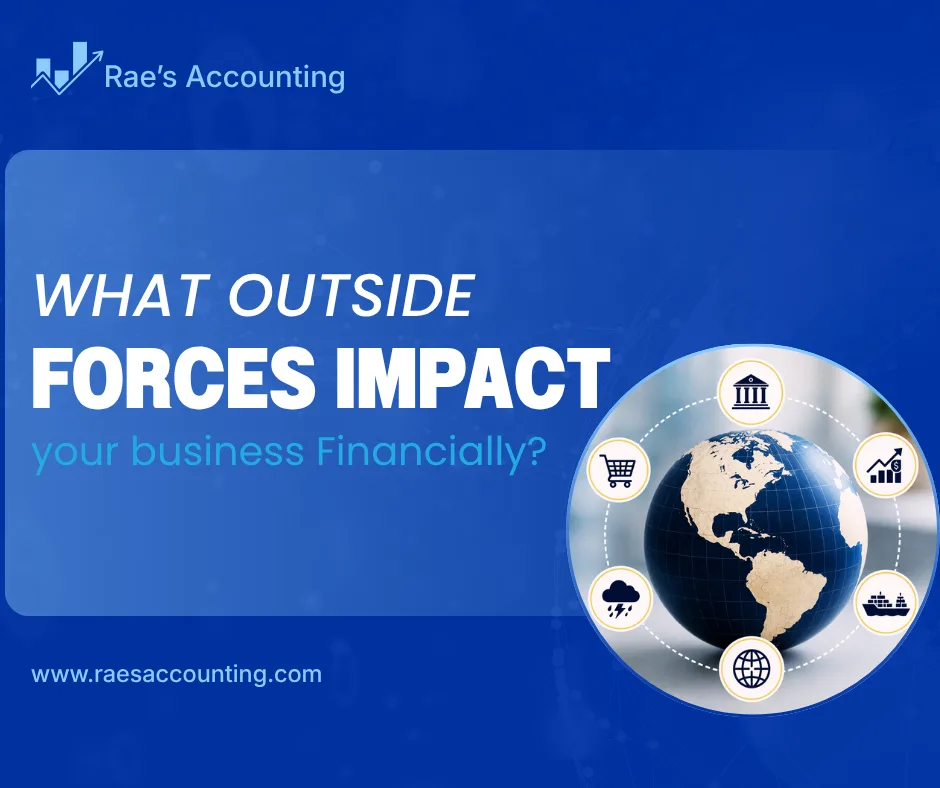
Understanding the Outside Forces That Can Impact Your Financial Strategy
Most business owners think taxes only change when their revenue changes.
But in reality, there are many outside forces that can directly impact your tax situation, financial planning, deductions, credits, reporting requirements, and long-term business strategy.
Some changes happen slowly over time. Others happen almost overnight.
From new legislation and economic shifts to natural disasters and global events, businesses today operate in a constantly changing environment—and those changes often show up first in your finances.
At Rae’s Accounting, we believe proactive planning matters because taxes are never just about numbers on a return. They’re connected to the world around your business.
Tax Laws and Political Changes
One of the biggest factors affecting business taxes is legislation.
Federal and state governments regularly introduce changes that can impact:
- Tax rates
- Deduction limits
- Bonus depreciation rules
- Business credits
- Payroll tax requirements
- Reporting obligations
- Retirement contribution limits
- Estate and succession planning
A single piece of legislation can completely change how a business plans for the year ahead.
For example, recent years have seen changes involving:
- Employee retention credits
- Expanded business deductions
- Energy efficiency incentives
- Changes to 1099 reporting thresholds
- Pandemic-related relief programs
- Shifting depreciation rules for equipment purchases
This is why tax planning should never be “set it and forget it.”
Businesses that stay informed and adapt early are often in a much stronger position than those reacting after the fact.
Inflation and the Economy
Economic conditions affect far more than sales.
Inflation can increase:
- Operating expenses
- Payroll costs
- Vendor pricing
- Equipment costs
- Interest rates
- Insurance premiums
At the same time, economic slowdowns can reduce customer spending and tighten cash flow.
These shifts often require businesses to reevaluate:
- Pricing strategies
- Estimated tax payments
- Capital purchases
- Hiring plans
- Profit projections
- Expense management
When the economy changes, tax strategy often needs to change with it.
Natural Disasters and Emergency Relief
Hurricanes, tornadoes, floods, wildfires, and other natural disasters can create major tax implications for businesses.
Depending on the situation, the IRS and state governments may provide:
- Filing extensions
- Penalty relief
- Casualty loss deductions
- Disaster-related tax credits
- Special retirement withdrawal provisions
- Payroll tax relief
Businesses may also face insurance claim issues, asset losses, inventory destruction, or operational shutdowns that affect financial reporting and tax planning.
For business owners in disaster-prone areas, preparation matters just as much as recovery.
Global Events and Supply Chain Disruptions
World events can affect local businesses more than many people realize.
Global conflicts, shipping disruptions, tariffs, fuel costs, and international trade policies can all influence:
- Inventory costs
- Product availability
- Manufacturing expenses
- Transportation pricing
- Vendor reliability
Even businesses that operate entirely within the United States can feel the financial effects of international instability.
When costs rise unexpectedly, businesses often need to adjust budgeting, forecasting, purchasing strategies, and tax projections quickly.
Industry-Specific Changes
Every industry has its own evolving rules and pressures.
For example:
- Contractors may see changes in material costs and labor regulations
- Healthcare businesses may face insurance and compliance updates
- Restaurants may experience payroll and tip reporting changes
- E-commerce businesses may deal with sales tax nexus requirements across multiple states
- Real estate investors may be impacted by interest rates and depreciation rules
What affects one industry may not affect another the same way.
That’s why generalized advice from social media or online forums often misses the bigger picture.
Technology and Digital Reporting Requirements
Technology continues to reshape how businesses report and track financial information.
Today’s businesses face increasing digital compliance requirements involving:
- Online payment reporting
- Electronic invoicing
- Payroll software integration
- Point-of-sale tracking
- Sales tax automation
- Digital bookkeeping standards
As reporting becomes more automated, accuracy becomes even more important.
Small mistakes can create larger compliance issues if systems are not set up correctly from the beginning.
Why Proactive Planning Matters
The businesses that navigate change best are usually the ones that plan ahead.
Waiting until tax season to review finances can make it harder to respond strategically to changing conditions.
A proactive approach allows businesses to:
- Adjust throughout the year
- Identify risks early
- Take advantage of available opportunities
- Improve cash flow planning
- Reduce unnecessary surprises
At Rae’s Accounting, we work with business owners to look beyond the return itself and focus on the bigger picture—because tax strategy should evolve as the world around your business changes.
Final Thoughts
Your taxes are not determined by one single factor.
They are influenced by legislation, economic conditions, industry changes, disasters, global events, business decisions, and long-term planning.
The question is not whether change will happen.
The question is whether your business is prepared for it.
That’s why having a strategy—and someone helping you monitor the moving pieces—can make all the difference.